
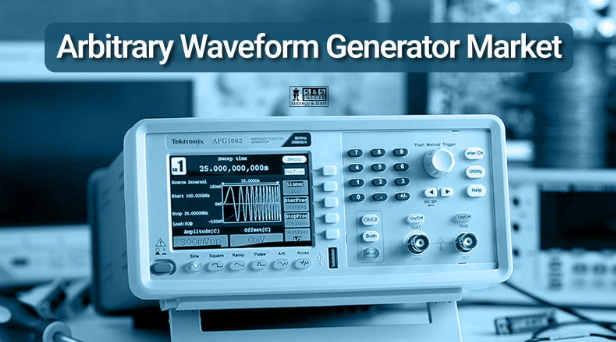
The global test and measurement industry continues to evolve as electronics become more complex and performance expectations rise across sectors. Among the critical instruments supporting this evolution are arbitrary waveform generators, which enable engineers and researchers to create precise, customizable electronic signals. The Arbitrary Waveform Generator Market size was valued at USD 444.98 Million in 2023 and is expected to reach USD 947.37 Million by 2032, growing at a CAGR of 8.79% over the forecast period from 2024 to 2032. This strong growth outlook reflects expanding applications across electronics design, telecommunications, aerospace, defense, and academic research.
The Arbitrary Waveform Generator Market is gaining momentum as industries demand higher signal accuracy, faster data rates, and more flexible testing capabilities. Unlike traditional signal generators, arbitrary waveform generators allow users to design complex waveforms tailored to specific testing scenarios. This capability is becoming essential in validating advanced semiconductors, high-speed digital systems, and next-generation communication technologies. As product development cycles shorten and design complexity increases, manufacturers and laboratories are increasingly relying on these instruments to reduce errors and improve time-to-market.
One of the primary reasons behind the market’s expansion is the rapid growth of electronics and semiconductor manufacturing. Modern electronic devices incorporate highly integrated components that must operate reliably under diverse conditions. Arbitrary waveform generators help simulate real-world signal environments, enabling engineers to test performance limits and identify potential failures early in the design process. As global investments in semiconductor fabrication and chip design continue to rise, demand for advanced test equipment is expected to follow a similar trajectory.
The rise of wireless communication technologies is also shaping market growth. Technologies such as 5G, emerging 6G research, and advanced radar systems require precise waveform generation to test modulation schemes, signal integrity, and system resilience. Arbitrary waveform generators play a vital role in emulating complex communication signals, making them indispensable tools for both commercial and defense-related applications. As communication standards evolve, the need for flexible and high-bandwidth waveform generation solutions will further accelerate adoption.
Market Drivers
A key driver supporting market growth is the increasing emphasis on research and development across industries. Governments, academic institutions, and private enterprises are investing heavily in innovation, particularly in areas such as aerospace electronics, automotive electronics, and medical devices. Arbitrary waveform generators enable controlled experimentation and accurate validation of prototypes, making them central to R&D environments.
Another important driver is the growing adoption of automation and digitalization in industrial testing. Modern production lines increasingly integrate automated test systems to ensure consistent quality and reduce human error. Arbitrary waveform generators, when combined with software-controlled platforms, allow seamless integration into automated setups. This capability enhances testing efficiency while maintaining high precision, making these instruments attractive to large-scale manufacturers.
Technological advancements in waveform generator design are also fueling demand. Newer models offer higher sampling rates, wider bandwidths, improved memory depth, and intuitive user interfaces. These enhancements enable more realistic signal generation and easier operation, encouraging upgrades from legacy equipment. As end users seek instruments that can support both current and future testing needs, technologically advanced waveform generators are becoming a preferred choice.
Future Outlook
Looking ahead, the Arbitrary Waveform Generator Market is poised for sustained growth as electronic systems become more sophisticated and interconnected. The continued development of electric vehicles, autonomous systems, and Internet of Things applications will create new testing challenges that require flexible signal generation solutions. Arbitrary waveform generators are well positioned to address these challenges by enabling accurate simulation of complex electrical environments.
In addition, ongoing research into quantum computing, advanced sensors, and high-frequency communication is expected to open new application areas for waveform generators. As these emerging technologies move from laboratories to commercial deployment, demand for precise and customizable signal testing tools will increase. Manufacturers that focus on innovation, software integration, and user-friendly designs are likely to gain a competitive edge in this evolving market landscape.

Conclusion
The Arbitrary Waveform Generator Market is on a strong growth path, supported by expanding electronics manufacturing, rising R&D investments, and the rapid evolution of communication and automation technologies. With the market projected to nearly double in value by 2032, arbitrary waveform generators will continue to play a critical role in ensuring performance, reliability, and innovation across industries. As testing requirements grow more complex, these instruments are set to remain indispensable tools in the global test and measurement ecosystem.
FAQs
What is the CAGR of the Arbitrary Waveform Generator Market?
The market is expected to grow at a compound annual growth rate of 8.79% during the forecast period from 2024 to 2032.
What is the forecast value of the market by 2032?
The Arbitrary Waveform Generator Market is projected to reach USD 947.37 Million by 2032, up from USD 444.98 Million in 2023.
Is regional growth expected to influence the market?
Yes, overall market expansion is supported by increasing adoption of advanced testing technologies across major industrial and research regions worldwide.