
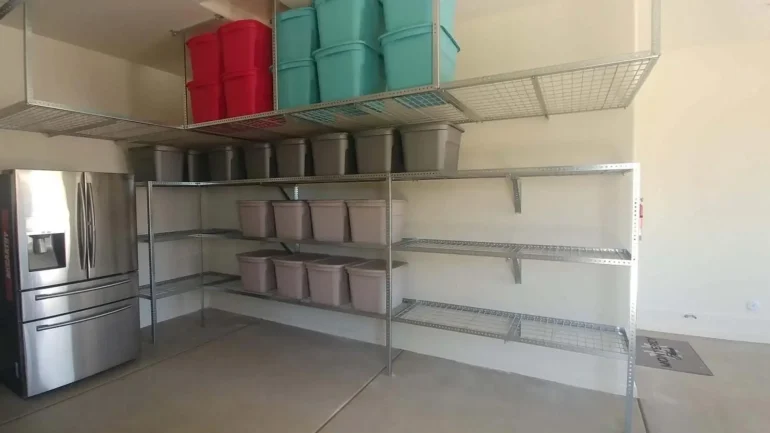
Most people call a professional organizer at a turning point. A parent is moving into assisted living, a house is going on the market, or a garage has quietly stopped holding a car. In the Phoenix area, those calls are getting more common, and the people making them often have no idea what a fair price or a qualified organizer looks like.
Hiring one isn’t complicated, but the field’s credentials are voluntary, so the homeowner does the checking. A few upfront questions separate a careful professional from someone who simply likes tidy shelves.
Why Demand Keeps Growing Across the Valley
The numbers behind the trend are plain. U.S. Census Bureau population estimates put Maricopa County’s residents age 65 and older at 697,595 in July 2020 and 789,700 by July 2024. That is about 92,000 more older residents in four years, and their share of the county rose from 15.7 percent to 16.9 percent.
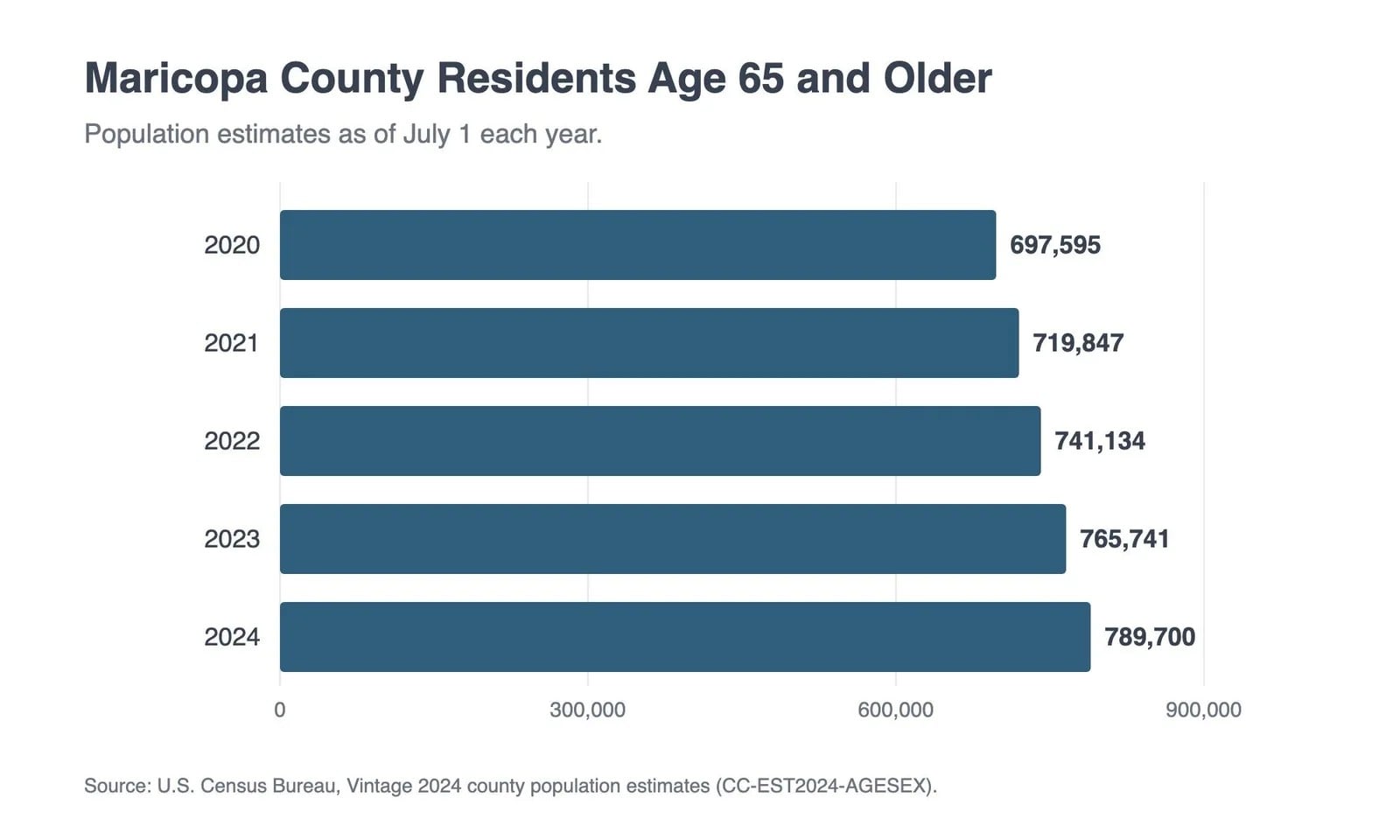
Maricopa County’s 65-and-older population grew every year from 2020 to 2024.
Many of those households are downsizing, merging two homes into one, or preparing a parent’s house for sale. Each move forces decisions about decades of belongings. That is the work organizers are hired to guide, and it is why the field now covers far more than closets and pantries.
Clutter Has a Measurable Cost at Home
Organizing can sound like a luxury until you look at what disorder does to a household. Researchers at UCLA’s Center on Everyday Lives of Families spent four years inside 32 Los Angeles homes and found that cars had been pushed out of 75 percent of the garages to make room for stuff.
The stress shows up in the body, too. In a 2010 study in Personality and Social Psychology Bulletin, Darby Saxbe and Rena Repetti found that wives who described their homes in more stressful terms, including clutter and unfinished projects, showed a flatter daily cortisol pattern. It is a correlation in a small sample, not proof that clutter causes stress, but it matches what many families describe.
What Professional Organizers Charge
Price is usually the first question, and national guides give a useful baseline. HomeAdvisor’s cost guide, updated in June 2026, lists an average of $554 per project and a normal range of $252 to $876. The same guide puts hourly rates at $55 to $100 and says most projects take two to ten hours.
Scope moves the number more than anything else. TaskRabbit’s home organization cost guide, updated in October 2026, shows how wide the ranges run by room.
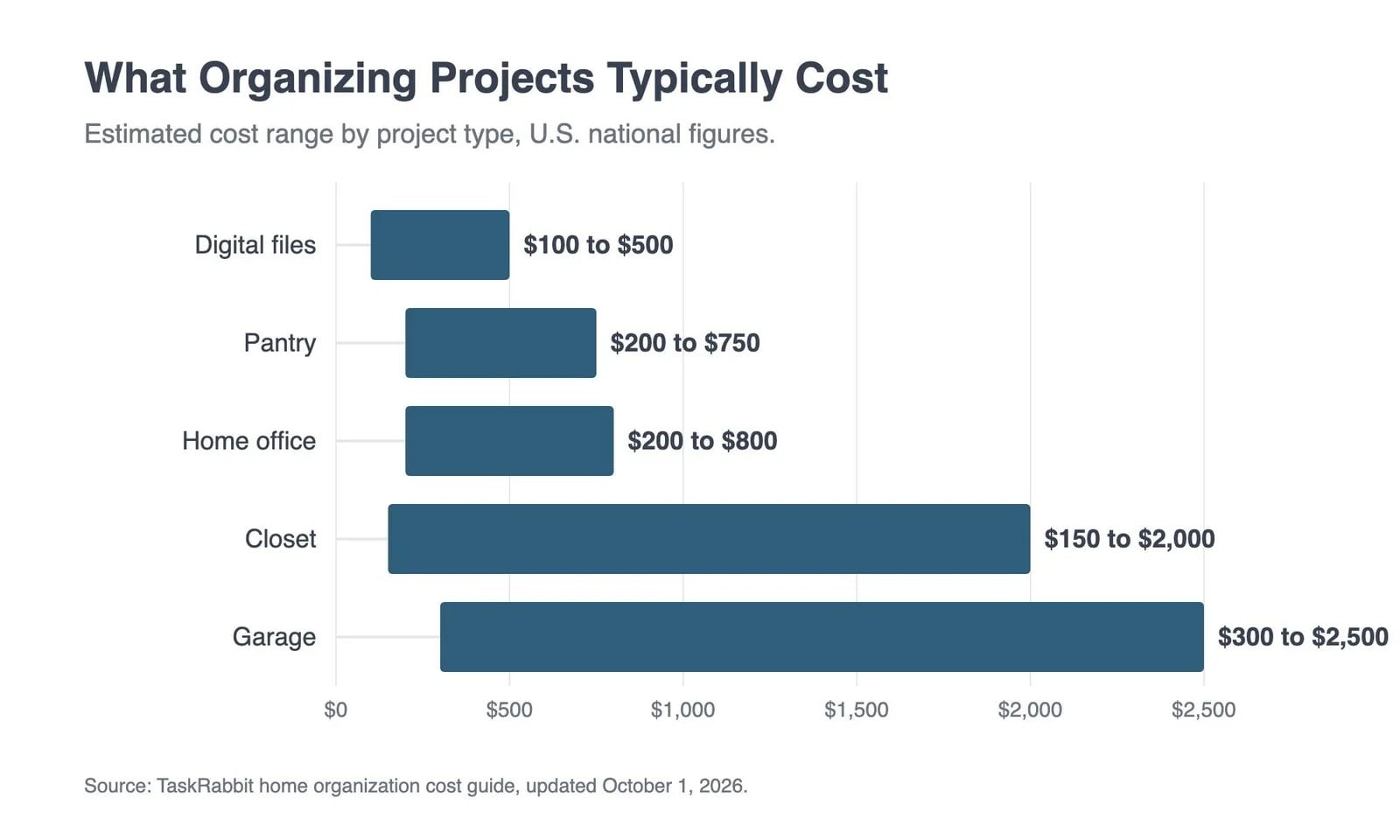
Garages and closets carry the widest price ranges because their size and contents vary the most.
A whole-home project in the same guide runs $1,500 to $10,000. Treat all of these as starting points. Ask any organizer to explain how they price a job before work begins: by the hour, by the project, or with a minimum booking.
Five Questions to Ask Before You Book
A short phone call or in-home consultation should answer most of these. If an organizer cannot answer them clearly, keep looking.
- What training or credentials do you hold? The Certified Professional Organizer credential requires 1,000 hours of documented paid work experience within the five years before applying, plus a two-hour, 125-question exam.
- Do you belong to a professional association? NAPO members, the National Association of Productivity and Organizing Professionals, pledge to follow a code of ethics that covers confidentiality and offering services only in areas where they are qualified.
- How do you set and share your fees? NAPO’s ethics code asks members to tell clients their fees and expenses in advance, so a clear written estimate is a reasonable request.
- Who will be in my home, and are they insured? Ask who does the work, how many people come, and what coverage the business carries.
- What happens to the things I let go of? Good organizers have a plan for donations, consignment, recycling, and disposal, and they tell you who pays for hauling.
Plan Around the Phoenix Heat
Timing matters more in the desert than it does in most of the country. The National Weather Service in Phoenix recorded 70 days at or above 110 degrees in 2024, the most on record. The 1991 to 2020 normal is 21 such days a year.

That heat shapes garage, patio, and storage-unit projects, which are often the largest jobs in a Phoenix home. Ask how an organizer handles summer work. Common answers include early-morning starts, shorter sessions, and moving sorting indoors.
Fall through spring is the easiest stretch for big outdoor projects. If a garage reset or a downsizing move can wait a few weeks, booking it for cooler months usually makes the work faster and safer for everyone involved.
Signs You Found the Right Fit
Credentials and pricing narrow the list, but fit decides the outcome. Organizing a parent’s house after a diagnosis or a death is emotional work. The right person listens first, does not judge, and lets the family make the final calls about what stays.
Look for an organizer who asks about your goals before talking about bins and labels. They should describe what the space needs to do afterward, not just how it will look. Reviews that mention patience and follow-through tell you more than reviews that only praise the finished photos.
Local experience helps, too. An organizer who already works with senior living communities, estate attorneys, and real estate agents in the Valley can often connect the pieces of a larger move.
A Local Example of How It Works
Some organizers bundle related services, which can simplify a move with a lot of moving parts. Busy Bees Concierge and Home Services, a professional organizer in Phoenix, combines home organizing with downsizing help, senior moves, and estate sales. The company starts with an initial consultation and uses it to provide an estimate before starting hourly work.
That consultation-first approach is worth asking for from any organizer you call. It gives you a price based on your actual space and shows you how the person works before you hand over a key.
Where the Field Is Heading
Professional organizing sits at the meeting point of three Phoenix trends: an older population, homes full of decades of belongings, and a climate that limits when hands-on work can happen. Each one adds to demand.
The industry’s standards have not caught up with that demand. Credentials and association membership are voluntary, and national price guides can vary by hundreds of dollars for the same room. Until that changes, a homeowner’s best protection is a short list of questions, a written estimate, and a consultation before the first box gets opened.